Industrial Line Marking Across Wellington & Waikato
When heavy vehicles, machinery and people share the same yard, faded lines and undefined hazard zones can become a serious liability. On active industrial sites, unmarked walkways, exclusion areas and vehicle routes leave your business exposed under New Zealand’s Health and Safety at Work Act 2015.
Professional industrial line marking maps out clear hazard zones, pedestrian walkways and traffic lanes across ports, plants, yards and construction sites, so everyone knows exactly where it’s safe to be.
Total Linemarking Solutions has been carrying out hard-wearing industrial line painting for businesses across the North Island for over 15 years. Our lines are built to survive heavy traffic, wash-downs and the New Zealand weather.
Contact Us
Tell us about your project and we’ll be in touch.
SiteWise Gold
Accredited
15+ Years'
Experience
NZTA & M7
Approved Products
North Island-Wide
Coverage
Industrial Sites We Mark
Our industrial line marking in Wellington and the wider North Island is built for demanding, high-movement environments.
Ports & Container Yards
Cargo handling, straddle carriers and pedestrian movement all cross paths in the same space. We deliver large-scale industrial line marking that keeps container operations flowing and people separated from plant.
Manufacturing & Processing Plants
Where forklifts and machinery share the floor with workers, clearly defined zones aren’t optional. We separate operational areas from foot traffic and mark the boundaries around fixed hazards.
Storage Yards & Hardstands
Outdoor sealed and asphalt yards take a beating from weather and heavy vehicles. We lay out bay allocations, laydown areas and clear vehicle lanes that hold up outside.
Construction & Civil Sites
Temporary and staged sites change fast. We mark access routes, exclusion zones and site traffic management to keep crews and visitors safe as the job evolves.
Heavy Industry & Depots
Fleet yards, transfer stations and industrial depots rely on obvious one-way systems and turning lanes to reduce congestion and eliminate the confusion that often causes incidents.
Marking an enclosed warehouse or factory floor instead? See our warehouse line marking service.
Emergency and Evacuation Markings
When seconds count, clear floor markings save lives. We mark fire exit routes, assembly points, and emergency equipment locations so your team can evacuate quickly and safely, and your facility meets its obligations under New Zealand’s health and safety regulations.
Hazard & Safety Marking Built for Industrial Sites
Every site is different, so we tailor the layout to how yours actually operates. Common industrial line painting we deliver includes:
- Hazard & exclusion zones: Clearly defined danger areas, machinery boundaries and no-go zones using recognised colour conventions.
- Pedestrian walkways & crossings: Dedicated routes that keep people clear of moving vehicles and plant throughout the working day.
- Vehicle lanes & traffic flow: One-way systems, turning lanes and speed indicators designed around your site’s layout.
- Outdoor laydown & loading areas: Marked bays and staging zones so materials and vehicles have their place.
- Emergency egress & assembly points: Escape routes, muster points and equipment locations marked so evacuation is fast and obvious.
We use New Zealand’s standard colour conventions so the message reads the same to everyone on site:
- Yellow for walkways and traffic lanes
- Red for fire and emergency equipment
- Black-and-yellow striping for caution around fixed hazards
- Blue for PPE and information zones
- White for staging areas
Combined with safety line marking and bollard installation for physical barriers, colour-coded zones create a layered system that measurably reduces accidents.
How We Work


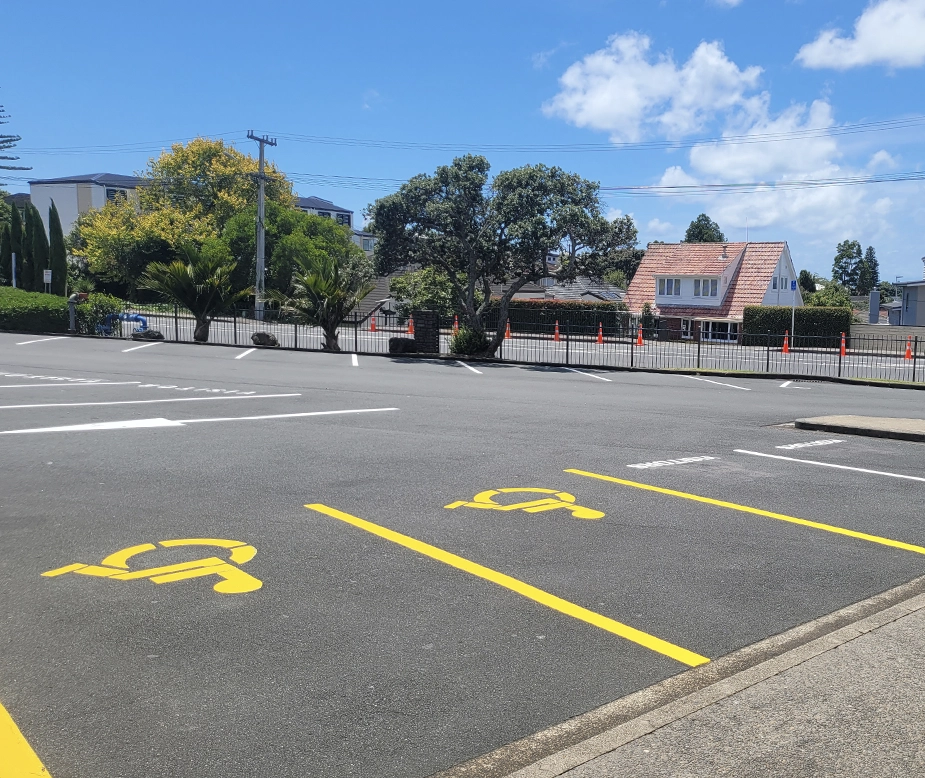
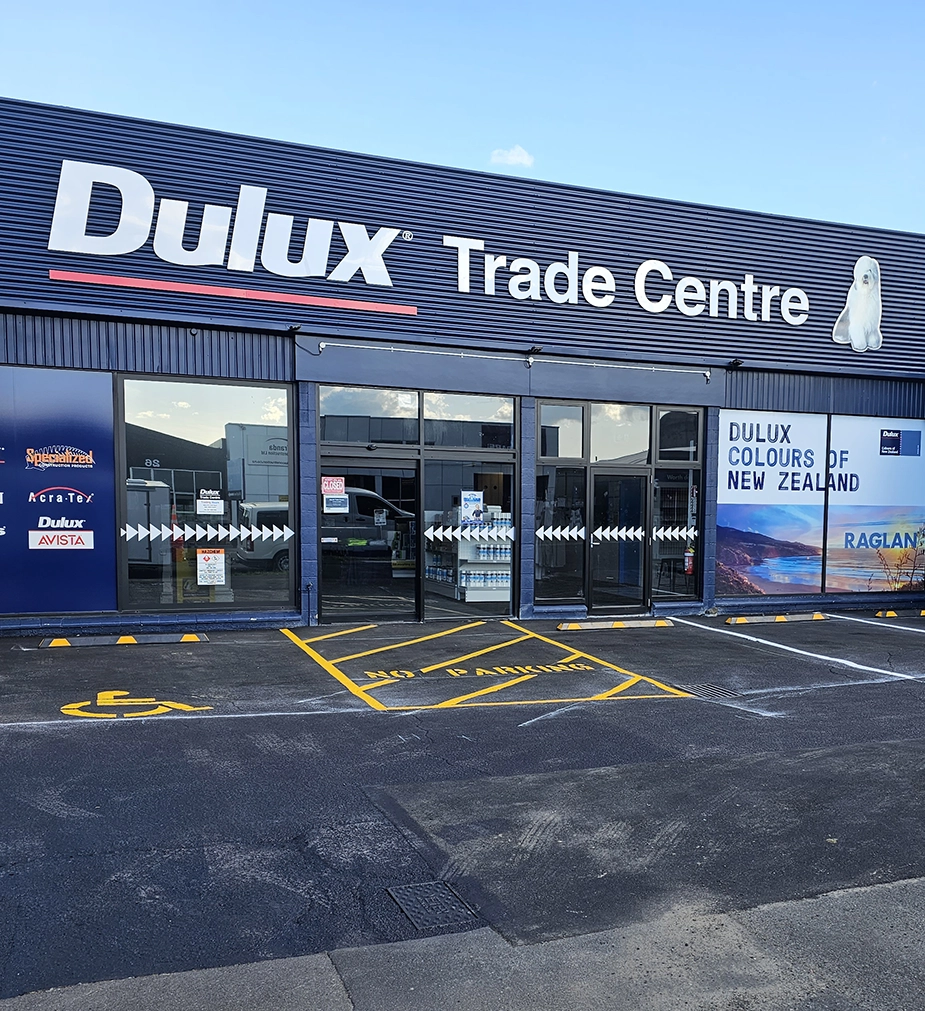
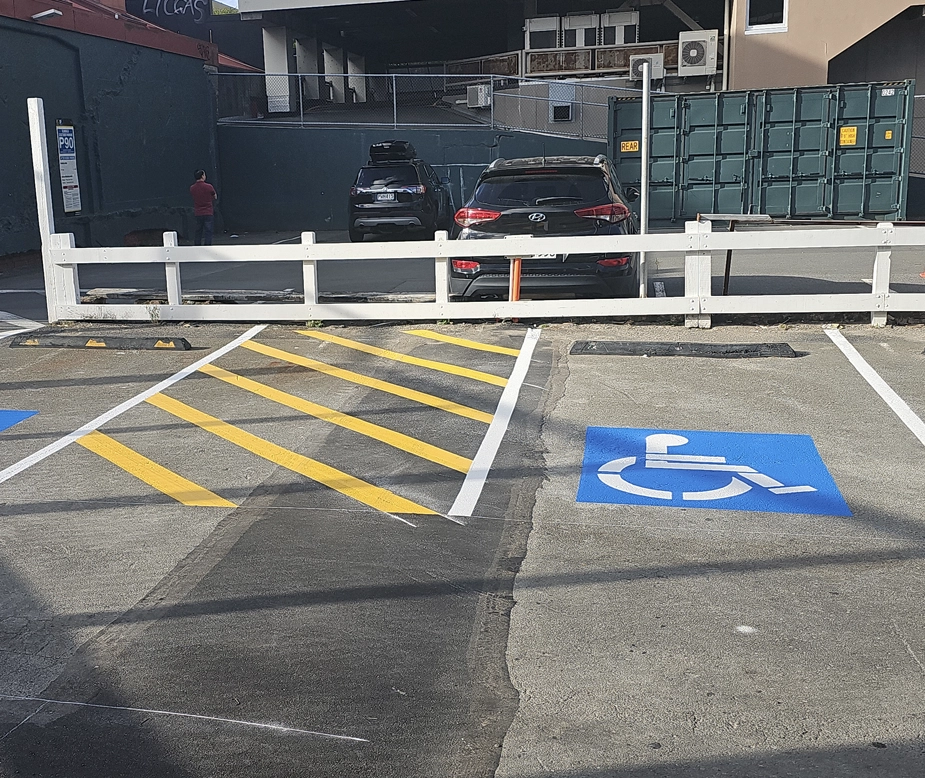
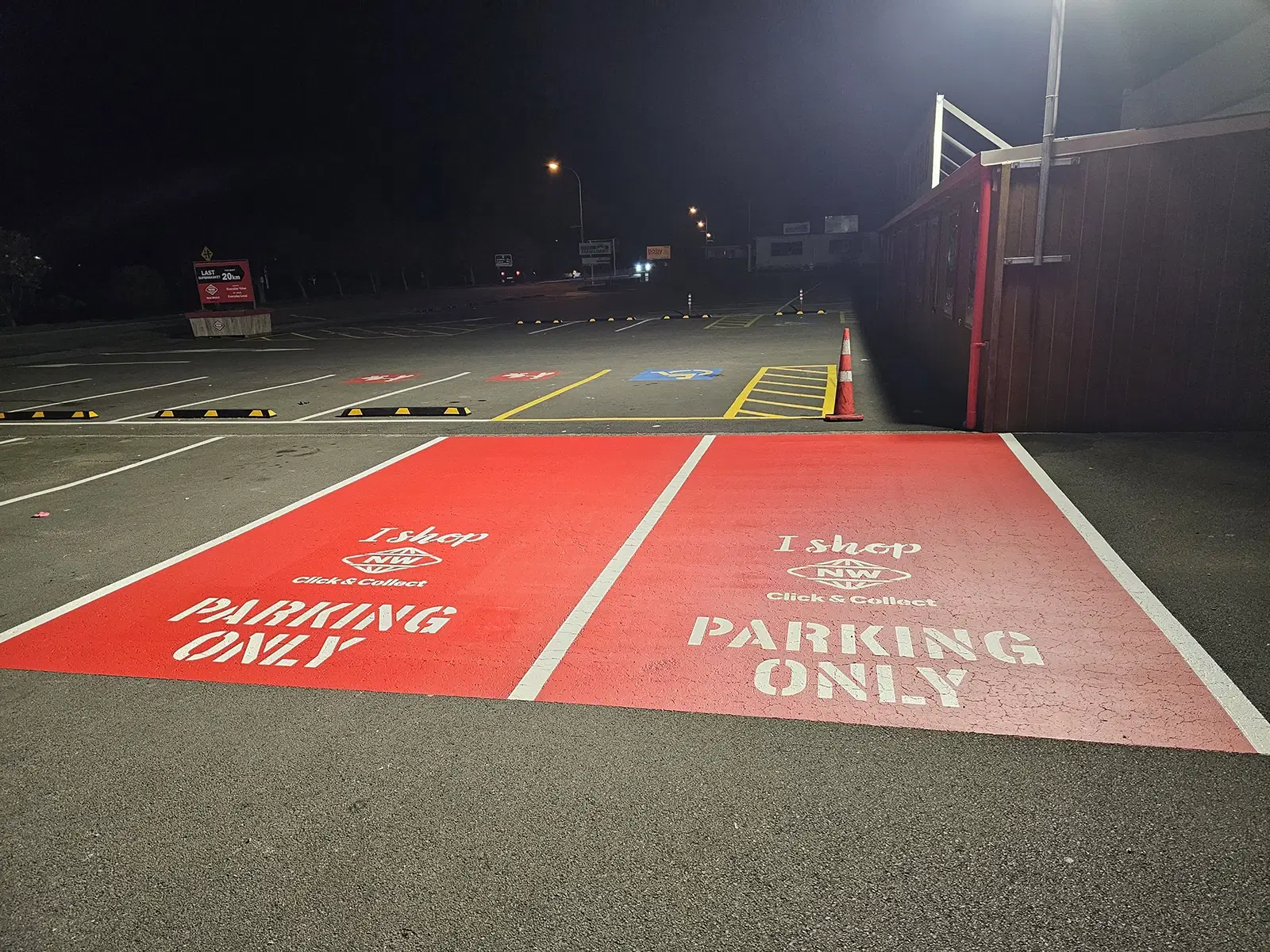
Our Previous Industrial Line Marking Projects
Frequently Asked Questions
What surfaces can industrial line marking be applied to?
We mark a wide range of industrial surfaces, including asphalt yards and driveways, sealed concrete hardstands, port aprons, external pathways and formed construction sites. During our site assessment, we check surface condition, traffic type and weather exposure to select the right marking system for the job.
How long does industrial line painting last outdoors?
On outdoor and heavy-traffic sites, lifespan typically ranges from 2 to 5 years, depending on vehicle volume, surface type and weather exposure. Areas worked by heavy plant and straddle carriers wear faster than lower-traffic pedestrian routes. We use premium, NZTA-approved materials to maximise durability and can advise on realistic maintenance cycles for your site.
Can you carry out line marking without shutting down our site?
In most cases, yes. We stage the work in sections so operations can continue in unaffected areas, and we schedule around shift patterns and quieter periods. Most applications are touch dry within 30 to 60 minutes, though we recommend limiting heavy vehicle traffic for as long as possible to allow full curing.
What are the WorkSafe requirements for marking an industrial site?
Under the Health and Safety at Work Act 2015, employers must maintain a safe workplace — which includes clearly defined traffic routes, separated pedestrian walkways, marked hazard zones and unobstructed emergency egress. We assess your site and recommend an industrial line-marking system that meets your obligations and any WorkSafe guidance relevant to your operation.
Keep Your Site Safe and Compliant
Keep your site safe and running smoothly. Total Linemarking Solutions is your local, family-owned team for industrial line marking in Wellington, Waikato and right across the North Island. Reliable, hard-wearing, and backed by free quotes.
Call 027 866 3262 or enquire online.
